
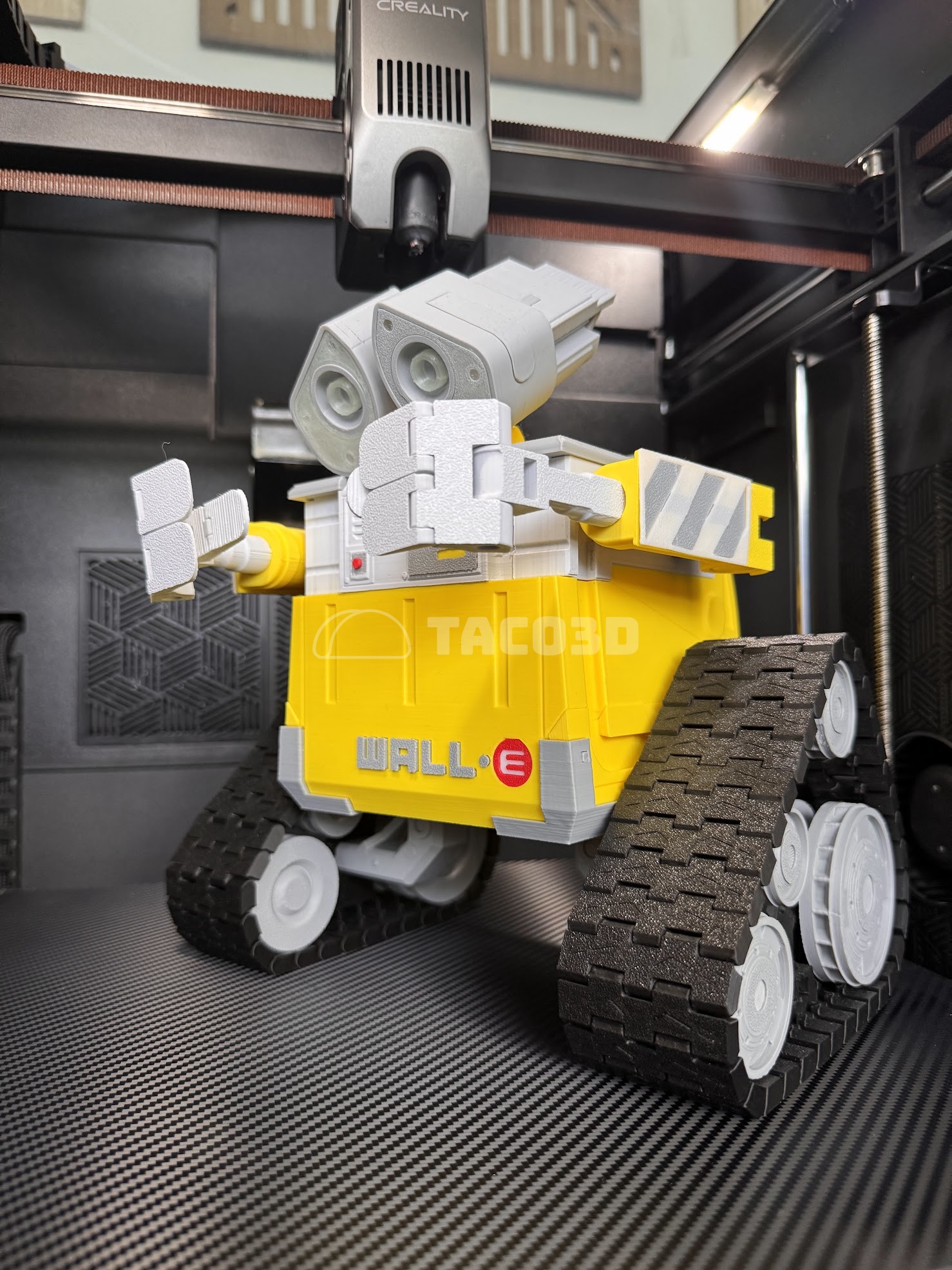
If you've ever seen a 3D printer in action, it was most likely an FDM printer. This technology, also called Fused Deposition Modeling, is the most widespread and accessible way of 3D printing in the world. In this article, we'll explain how it works and why it's ideal for beginners.
How Does It Work?
Think of it as a very sophisticated computer-controlled hot glue gun. The printer pulls a plastic string (filament), melts it in a nozzle, and then deposits it layer by layer onto a build plate. This process repeats until a finished three-dimensional object is created.
Most Common Materials
- PLA (Polylactic Acid): The king of materials for beginners. Made from corn starch, non-toxic, and easy to print with. It has beautiful colors but is not suitable for high temperatures.
- PETG: The middle ground. More durable than PLA, suitable for practical parts for outdoor use or kitchen gadgets.
- TPU: A flexible rubber-like material. Great for phone cases or seals.
Main Advantages
FDM printing is popular for its mechanical strength and low material cost. It's ideal for making practical household items, rapid prototypes, toys, or workshop organization tools. Moreover, today's modern machines like our Creality or Flashforge printers at Taco3D achieve incredible speed without losing quality.